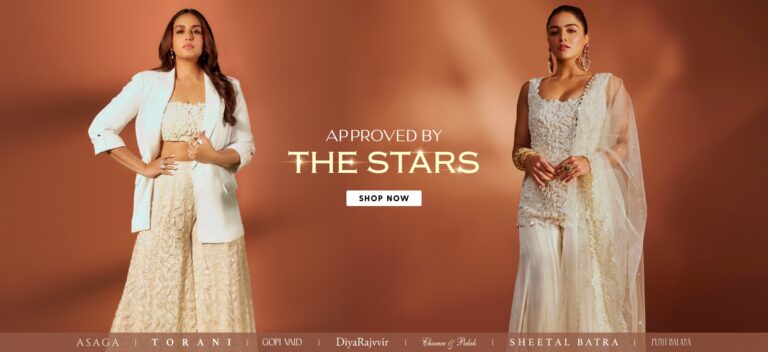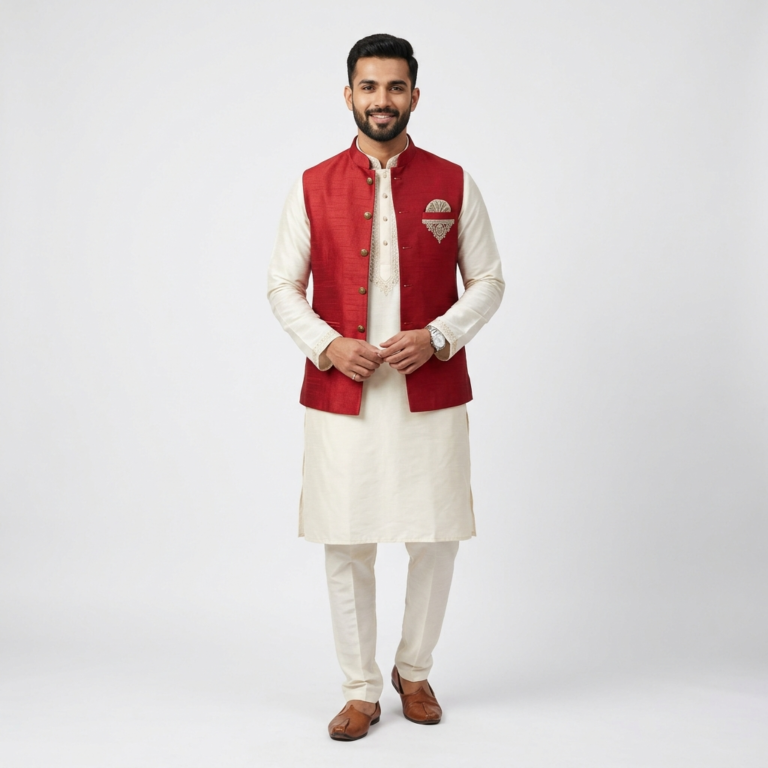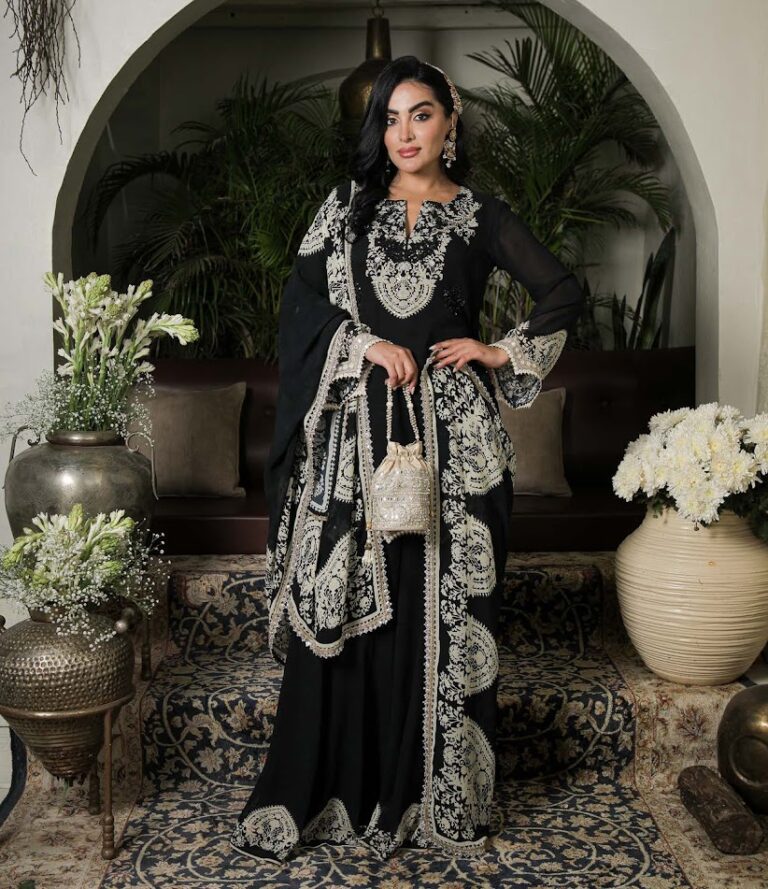
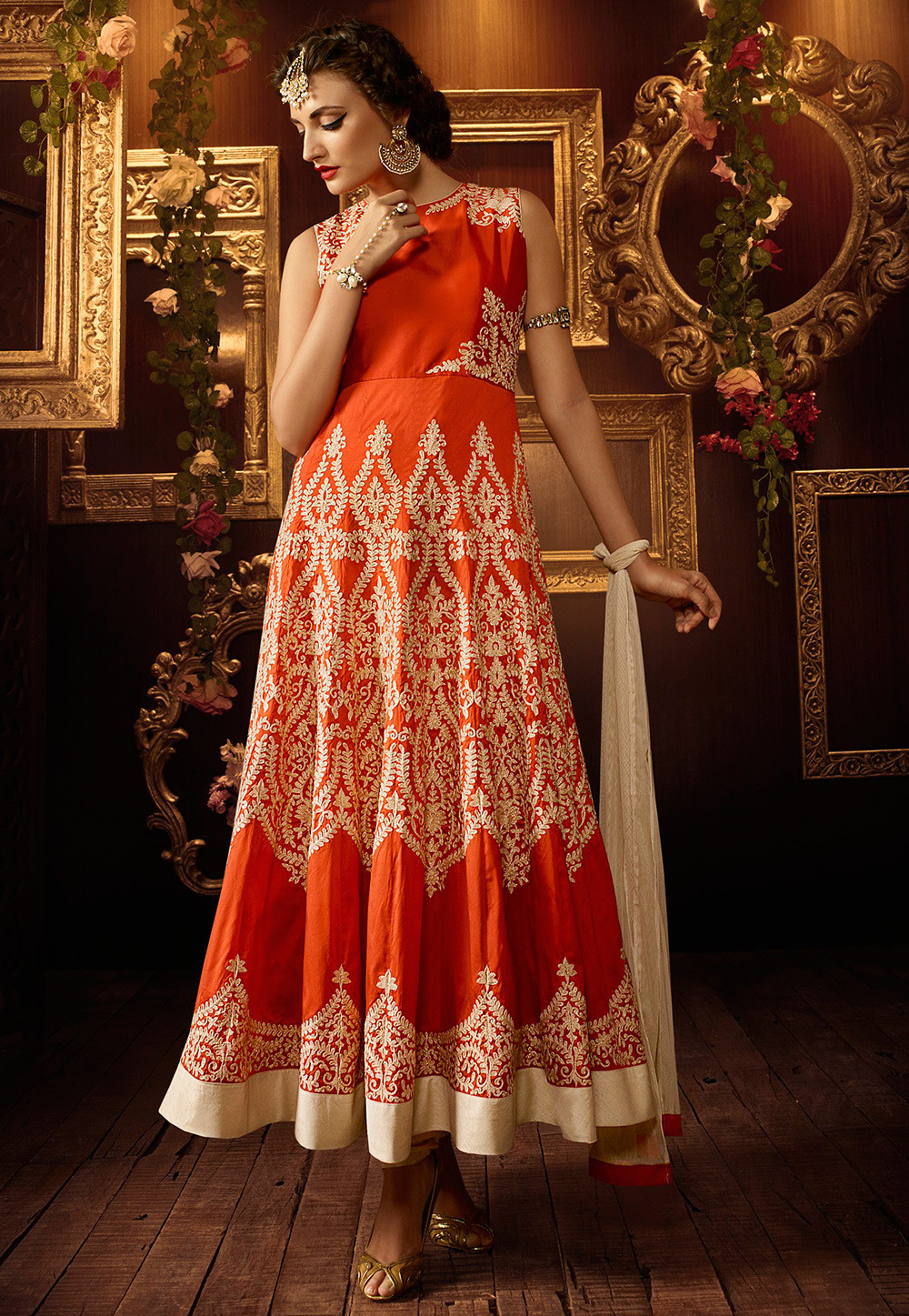
An Indian wedding is not one event, it is five or six, each with its own light, location, mood and dress code. Getting the wardrobe right function by function is mostly a question of matching weight and colour to what the day actually demands.
Haldi
Daytime, usually outdoors, and turmeric gets on everything. This is not the moment for heavy embroidery or a fabric you love too much. Light cotton, linen or a simple georgette in yellow, marigold or white is the traditional call.
Keep jewellery minimal, choose something you can move in, and accept that the outfit may not survive. Our haldi and mehndi edit is built around exactly this.
Mehndi
You will be seated for a long time with your hands occupied, so sleeves matter more than usual. Three-quarter or short sleeves keep the design clear. Greens, oranges and bright pinks are traditional, and a sharara or gharara set works particularly well because the volume sits below the waist and leaves your arms free.
Sangeet
The most physical evening of the wedding. You are dancing, likely for hours, often under warm lights. Prioritise movement and breathability over grandeur.
Fluid georgette, a lighter lehenga, or an indo-western silhouette all work. Sequins and mirror work catch light beautifully on video. Avoid anything with a heavy hem you will be lifting all night. See the sangeet edit.
The wedding ceremony
The most formal moment and the one that lives longest in photographs. This is where weight, embroidery and traditional colour earn their place. A bridal lehenga or a bridal saree in silk or Banarasi is the standard.
Two practical notes: ceremonies run long, often with sitting, standing and walking around a fire, so confirm you can manage the weight for several hours. And check how the outfit reads under your venue’s lighting, not just in the fitting room.
Reception
The most open of the functions, and the one where contemporary choices land best. A gown, a structured floor-length anarkali, a pre-draped saree or a sharper lehenga all suit an evening reception.
Deep jewel tones, metallics, ivory and black all photograph well under artificial light. See the reception edit.
If you are a guest
Three rules cover almost everything. Do not wear red or ivory to the ceremony, since both can read as competing with the bride. Match your formality to the function rather than to the venue. And when in doubt, a well-cut anarkali or a silk saree is never wrong at any Indian wedding.
Our wedding guest edit is put together with this in mind.
Plan the wardrobe as one thing
The most common mistake is buying function by function, which usually ends with three outfits in the same colour family and nothing for the mehndi. Plan the whole set at once. Our bridal trousseau service does exactly that, and you can book a consultation to work through it with us.